


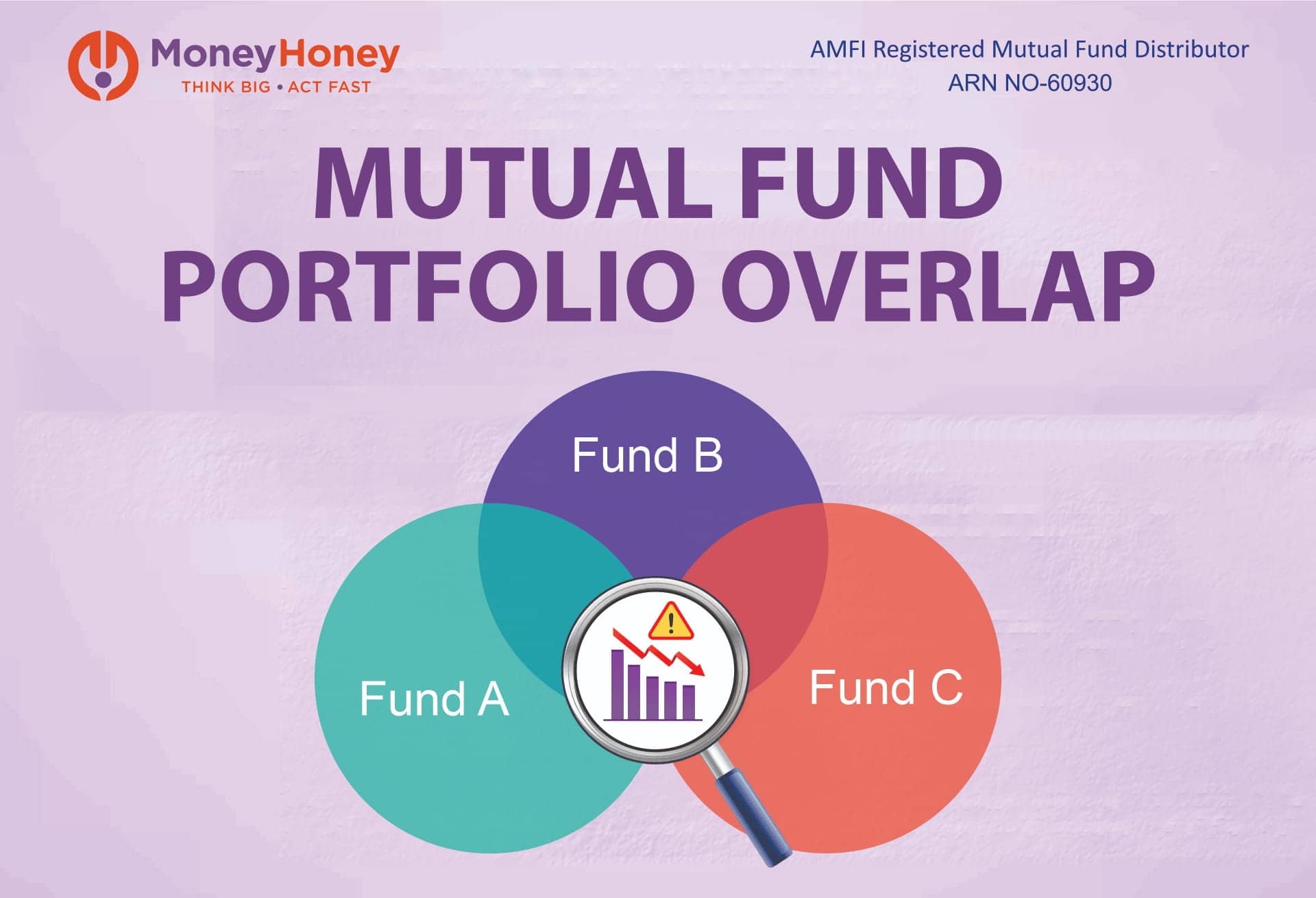
Any investment specialist asks to diversify our investment portfolio to safeguard it from sudden risks. The aim of diversification is to spread and mitigate risk.Diversification is a core investment principle that spread assets across different asset classes, sectors and investment styles which in turn help to balance risk of our entire investment portfolio.
Many investors follow this advice and invest in multiple mutual fund schemes across categories. But what if, unknowingly, several of your funds are invested in the same stocks? This is where mutual fund portfolio overlap comes into play.
Portfolio Overlap in Mutual Funds refers to similarity or duplication among the holdings of multiple funds within an investor's portfolio.Portfolio overlap is one of the most common - and most ignored problems in mutual fund investing. It can quietly reduce diversification, increase risk, and limit the benefits you expect from holding multiple mutual funds. Now, in this blog let’s understand-
How Does Mutual Fund Portfolio Overlap Happen?
- Investment Objectives-
Funds following different strategies such as - Growth-oriented funds, Quality-focused funds, Momentum-based funds might end up holding the same companies. Even if the investment stylesdiffer, this unknowingly may lead to concentration in stocks of same companies.
- Multiple Funds from the Same Category-
Also when you include mutual funds within the same category like 4 multi-asset funds, 5-6large cap funds etc., it can often invest in similar stocks which might yield negative investment outcomes due to similarities. For example - if expecting large cap stocks to outperform in next 1-2 years, therefore you invest in 3-4 funds of same category like Nippon India Large Cap Fund, ICICI Prudential Large Cap Fundetc., however if forecasts went wrong, you might yield negative returns in that funds.
- Limited Review of Portfolio Holdings-
When investors do not periodically assess the underlying holdings of their funds, they may unknowingly build a portfolio with repeated exposure to the same stocks or sectors which reduces the overall benefit of portfolio diversification in mutual funds.
Portfolio Overlap Disadvantages?
At first sight, overlap may not seem harmful as many good companies appear in our portfolios. But excessive overlap of those stocks in our portfolio can create multiple issues like:
- False Sense of Diversification-
When markets fall, stocks that are widely held tend to fall together, which means if your overlapping funds are heavily invested in the same stocks; due to positive correlation in those stocks, it can impact multiple funds at the same time and may lead to portfolio losses. Thus, instead of risk being spread out, it becomes concentrated.
- Limited Upside Potential-
Diversification is not just about reducing losses - it’s also about capturing opportunities. If all your funds own the same top stocks, you might have missed exposure to other sectors or emerging markets. For example - Investing in three different Technology Funds, typically results in extremely high overlap, as they all hold similar and popular tech stocks. So considering not investing in other sectors or themes might lead to missed exposure to it.
- Higher Risk During Market Corrections-
When markets fall, stocks that are widely held tend to fall together. So, if your overlapping funds are heavily invested in the same stocks, a downturn in those stocks can impact multiple funds at the same time and might lead to sharper portfolio losses.
How to Identify Portfolio Overlap Within Mutual Funds?
- Use Online Overlap Tools-
Several Indian platforms offer portfolio overlap checkers. Investors can utilise these online tools and calculators to analyse the degree of overlap across their mutual fund schemes regarding common stocks and their weightage. - Check Funds Manually-
Manually comparing your mutual fund portfolios also provides insight into overlapping holdings. - Expert Guidance-
Reliable AMFI registered mutual fund distributor like Money Honey Financial Services Pvt. Ltd. can guide you by analysing your mutual fund portfolio and would recommend steps to follow ahead.
Effectively identifying Portfolio Overlap empowers investors to make informed decisions about their Mutual Fund holdings. This enables them to strategically reallocate investments and reduce duplications for a more diversified and balanced portfolio.
How to Fix It?
- Limit the number of funds of similar categories or investment styles.
- Replace overlap funds with complementary funds which may make your portfolio more balanced across market conditions like adding fund with new investment style or sector which your portfolio might not have exposure to.
- Periodic review help you keep your mutual fund investments efficient.
- Take the help of an investment specialist to suggest actions to fix it.
Things to Remember:
- Diversification is about quality, not quantity.
- The goal is not to have zero overlap, but controlled overlap.
- The idea of investing is to add different sources of return, not concentrating in similar mutual fund categories.
- Avoid frequent churning of portfolio as long-term discipline matters more.
Conclusion
Having a mutual fund portfolio has many benefits for investors looking for good and regular returns. However, it is necessary to have the right diversification through good fund allocation. Mutual fund portfolio overlap is not a mistake - it’s an unrecognized risk.Most investors don’t intend to over-concentrate their investments; it happens gradually as new funds are added over time. The solution is not to keep adding funds, but to build a purposeful and a well-balanced portfolio.
By understanding, checking, and fixing portfolio overlap, you take a big step towards smarter and more disciplined mutual fund investing.
Disclaimer: This report is prepared in his personal capacity and neither the Author nor Money Honey Financial Services Pvt Ltd assumes any responsibility or liability for any error or omission in the content of the article. Investments in mutual funds and other risky assets are subject to market risks. Please seek advice from an investment professional before investing.